accontancy depreciation
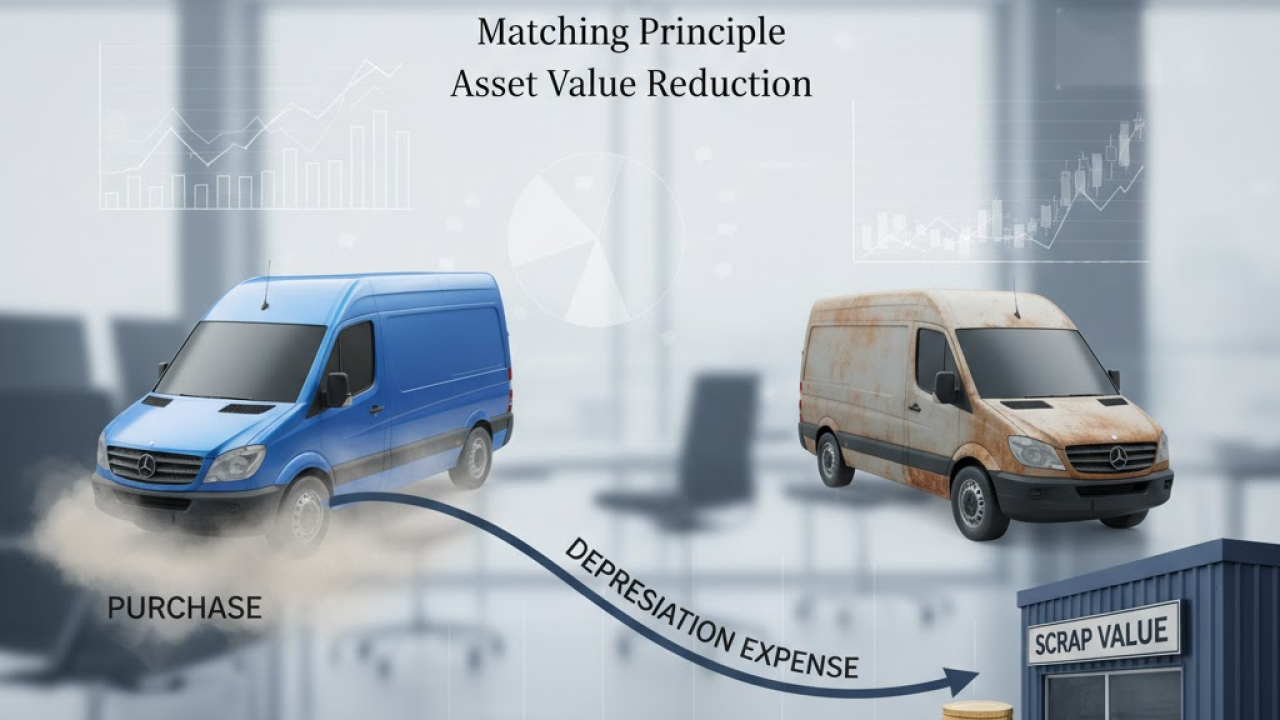
. Accurate Financial Reporting Objective: Ensure that financial statements accurately reflect the company's financial position Matching Principle Objective: Align expenses with the revenues they help generate during the same period . Compliance with Regulations Objective: Follow accounting standards like GAAP or IFRS to ensure legal compliance. Cost Control Objective: Help businesses manage and reduce unnecessary costs. Profit Measurement Objective: Accurately measure and report profits or losses over a period. Asset Management Objective: Track and optimize the use of company assets. Options: Cash Flow Management Objective: Ensure sufficient liquidity to meet financial obligations and operations. Options: Tax Reporting Objective: Accurately report income and expenses to meet tax obligations Budgeting and Forecasting Objective: Plan for future income and expenditures to ensure business growth. Internal Controls Objective: Establish systems and procedures to safeguard company assets Revenue Recognition Objective: Recognize revenue when it is earned, not necessarily when cash is received. Financial Transparency Objective: Ensure that financial reports are clear and easily understood by stakeholders. Capital Structure Management Objective: Maintain an optimal balance of debt and equity to maximize company value. Liquidity Management Objective: Ensure the company has enough short-term assets to meet its liabilities. Expense Control Objective: Monitor and reduce unnecessary expenses to maximize profitability. Depreciation Management Objective: Allocate the cost of long-term assets over their useful life to ensure accurate financial reporting. Risk Assessment Objective: Identify financial risks and develop strategies to mitigate them. Accounts Reconciliation Objective: Regularly reconcile accounts to ensure financial accuracy and prevent errors. Investment Appraisal Objective: Evaluate potential investments to ensure they align with business goals and generate returns.
To understate company assets
To provide financial data that misrepresents the company
o reflect the true financial position of the company
To minimize the reporting of liabilities
To report expenses before revenue
To match revenues with liabilities
To match expenses with revenue in the same period
To match revenues with capital expenditures
To follow personal preferences over standards
To comply with accounting laws and standards
To ignore government regulations
o minimize the amount of taxes owed
o increase operational costs
To help businesses control and minimize costs
To report higher costs to reduce profits
To ignore cost management strategies
o focus only on revenue without considering expenses
To calculate the company’s profits or losses correctly
To ignore profit and focus on growth
You said: and iska description likho one line me likhna You said: keyboard description likho ek hi line me You said: 100 word me jis releted se aap mujhe objective likhe the usi releted se description likho You said: isi releted se keyboard likho thoda Get smarter responses, upload f
To let assets depreciate rapidly
To maximize the value of assets through proper management
To ignore asset tracking
To sell all assets immediately
To ignore cash flow and focus on profits
To maintain healthy cash flow for business operations
To let cash flow be unpredictable
To deplete cash reserves rapidly
To reduce tax liabilities by any means
To misreport financial information for tax benefits
To follow tax laws and report accurately
To ignore tax laws and regulations
To ignore future financial planning
To create unrealistic financial projectio
To forecast only profits
To develop a realistic budget and forecast
To allow free access to company assets without control
To ignore the need for internal controls
To implement controls to protect against fraud and theft
To avoid checks and balances in operations
Recognize revenue when cash is received
Recognize revenue only at the end of the fiscal year
Recognize revenue when it is earned, regardless of cash flow
Ignore revenue recognition
Hide financial information to avoid scrutiny
Provide financial reports that are accurate and easily understood
Provide reports with excessive jargon
Only share financial information with the board
Rely only on debt financing
Avoid taking on any debt
Ignore capital structure management
Maintain a balanced and optimal capital structure
Ignore short-term liabilities
Only invest in long-term assets
Maintain sufficient liquidity to meet current obligations
Prioritize long-term investments over short-term liquidity
Control and minimize unnecessary expenses
Increase all operational costs
Ignore expense management
Only focus on revenue generation
Ignore depreciation on assets
Allocate depreciation over a random period
Accurately allocate depreciation to match asset usage
Depreciate assets faster than their actual wear and tear
Ignore financial risks
Identify and assess risks to develop mitigation strategies
Embrace all risks without caution
Only focus on operational risks
Skip account reconciliation to save time
Reconcile accounts periodically to ensure accuracy
Only reconcile accounts at year-end
oncile accounts only when errors are found
Invest blindly without proper evaluation
Ignore the potential return on investments
Invest only in high-risk ventures
valuate investments using financial metrics to assess potential returns